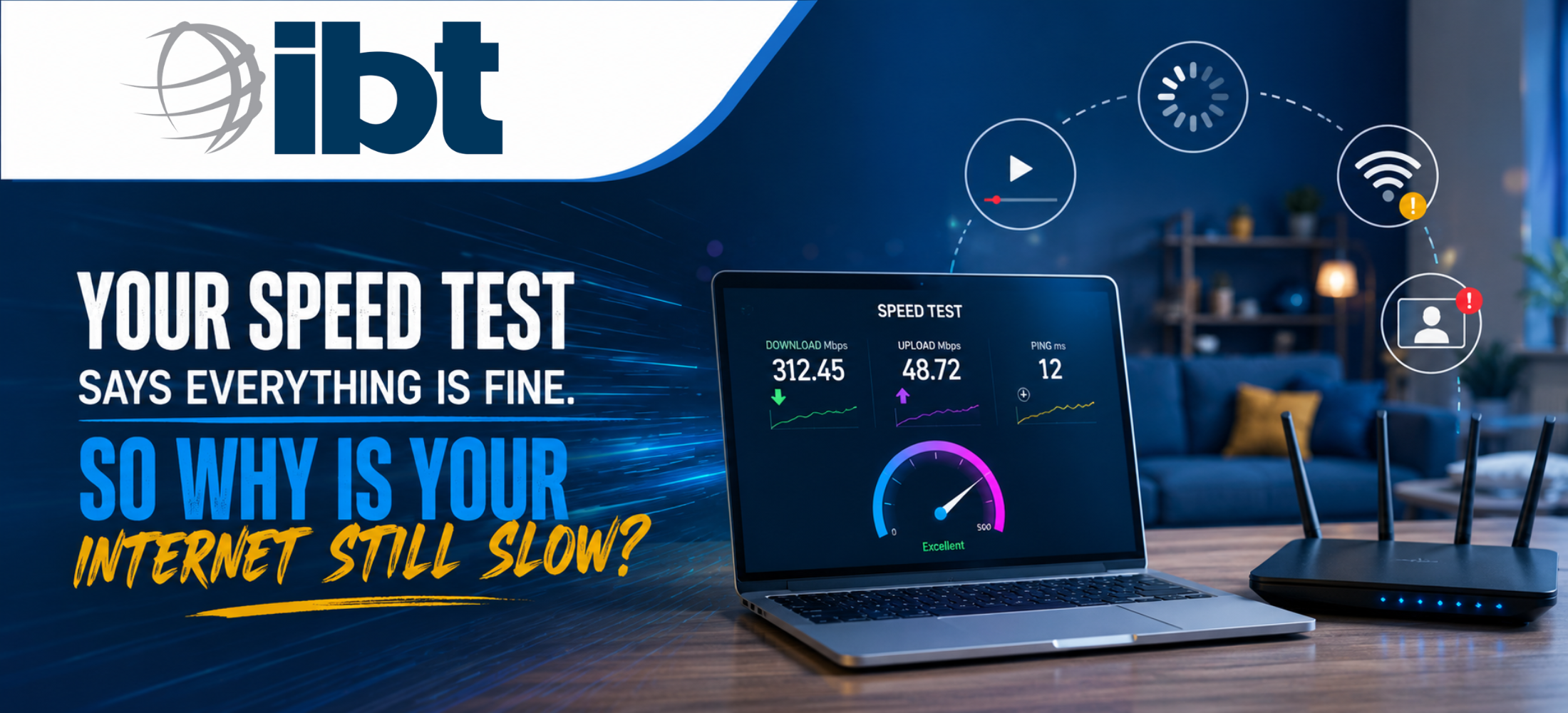
Many people use the terms Wi-Fi and internet connection as if they mean the same thing. If a video buffers or a webpage won’t load, it’s common to hear, “The Wi-Fi is down.” But in reality, Wi-Fi and the internet are two different parts of how we get online—and understanding the difference can help you troubleshoot issues and improve your overall home connectivity.
Knowing how these two systems work together is key to getting faster speeds, stronger coverage, and a more reliable online experience.
Understanding the difference helps you identify where a problem might be happening. If your internet plan is fast but your video calls keep freezing in certain rooms, the issue might be weak Wi-Fi coverage, not your internet speed.
On the other hand, if every device in your home is slow—even when standing close to the router—the issue could be your broadband connection from your provider.
The internet is the global network that connects millions of computers, servers, and data centers around the world. It’s what allows you to visit websites, stream movies, send emails, join video calls, and use online apps.
Your internet service provider (ISP) delivers this connection to your home through physical infrastructure such as fiber-optic cables, cable lines, or DSL. The quality and speed of this connection determine how much data can travel to and from your home at any given time.
Wi-Fi is the wireless system inside your home that allows your devices—like phones, laptops, smart TVs, and tablets—to connect to your router without cables.
Think of Wi-Fi as the bridge between your devices and your internet connection. Your router receives internet from your provider and then distributes it wirelessly throughout your home. The strength of your Wi-Fi signal affects how well each device can connect from different rooms.
For better performance, it’s important to look at both your internet plan and your Wi-Fi setup. Upgrading to faster internet—such as fiber internet—increases the amount of speed coming into your home.
Improving Wi-Fi may involve moving your router to a central location, using mesh Wi-Fi systems, or reducing interference from walls and other electronics. When both your internet connection and Wi-Fi network are optimized, you get smoother streaming, clearer video calls, and faster downloads.
Wi-Fi and the internet work together, but they play different roles in your online experience. Understanding how they interact helps you make smarter decisions about equipment, placement, and service options.
When both parts are working at their best, your entire home benefits from stronger, more reliable connectivity.